The human mind has evolved continuously to understand and to create. It carries an innate capacity to attend to the very act of observation—treating process itself as essential, and giving weight to the conscious effort of imagining an experience.
My own practice begins with the organic relationships I observe between individual cells and the
organisms they compose in nature. I bring these relationships onto the canvas and let them unfold along a continuous flow of time, sustaining an ongoing effort to identify and describe that process.
The process is, by its nature, deliberate. It does not ask for emotion or impulse in the moment; it asks me to take in and hold the whole of the picture plane—sometimes more attentively than the subject itself—and to honor the improvisational character of working in the present. As I lay down each mark, I expect thousands of intrinsic, metaphysical questions about composition to be absorbed into the surface and, in time, to settle into remembered form.
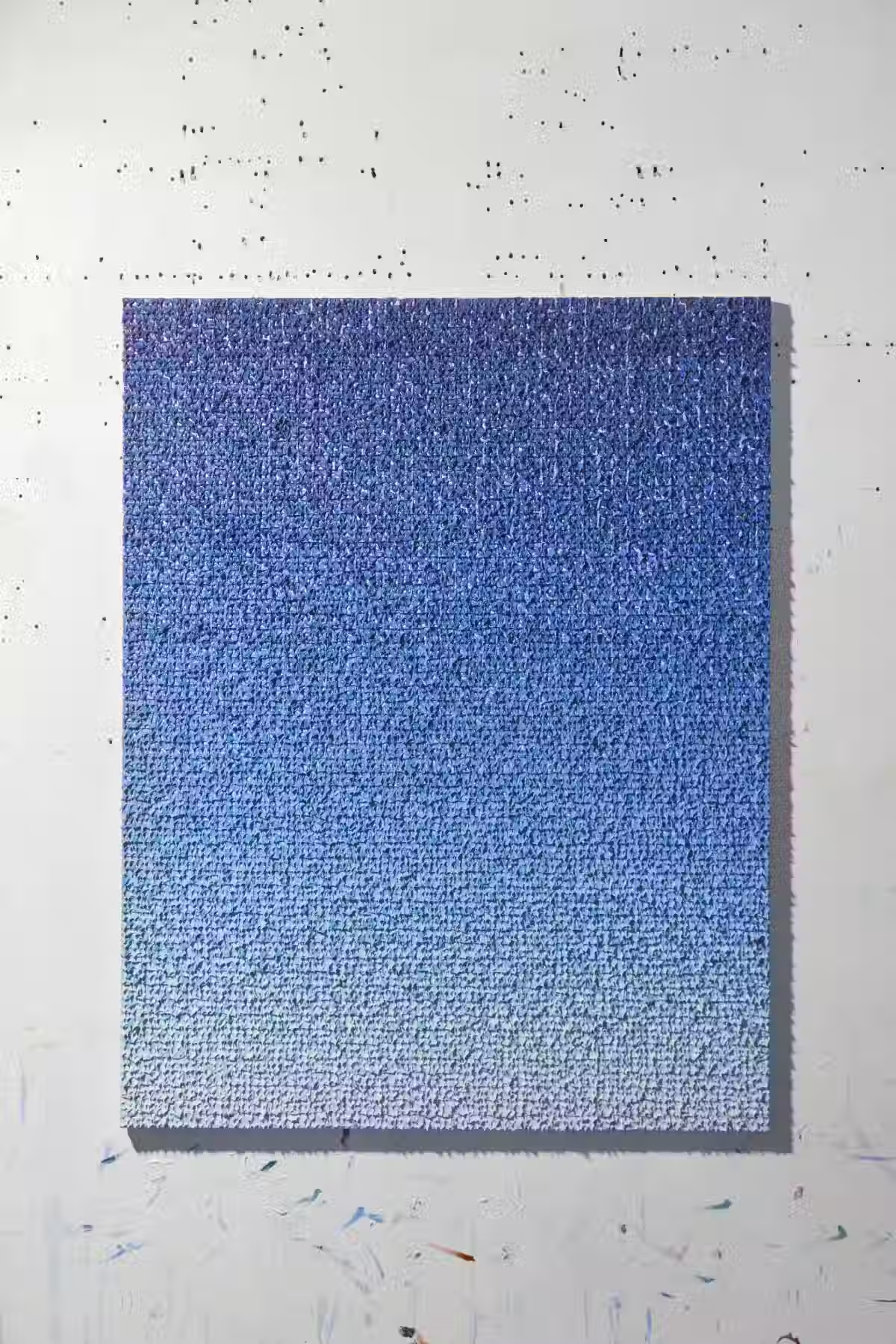
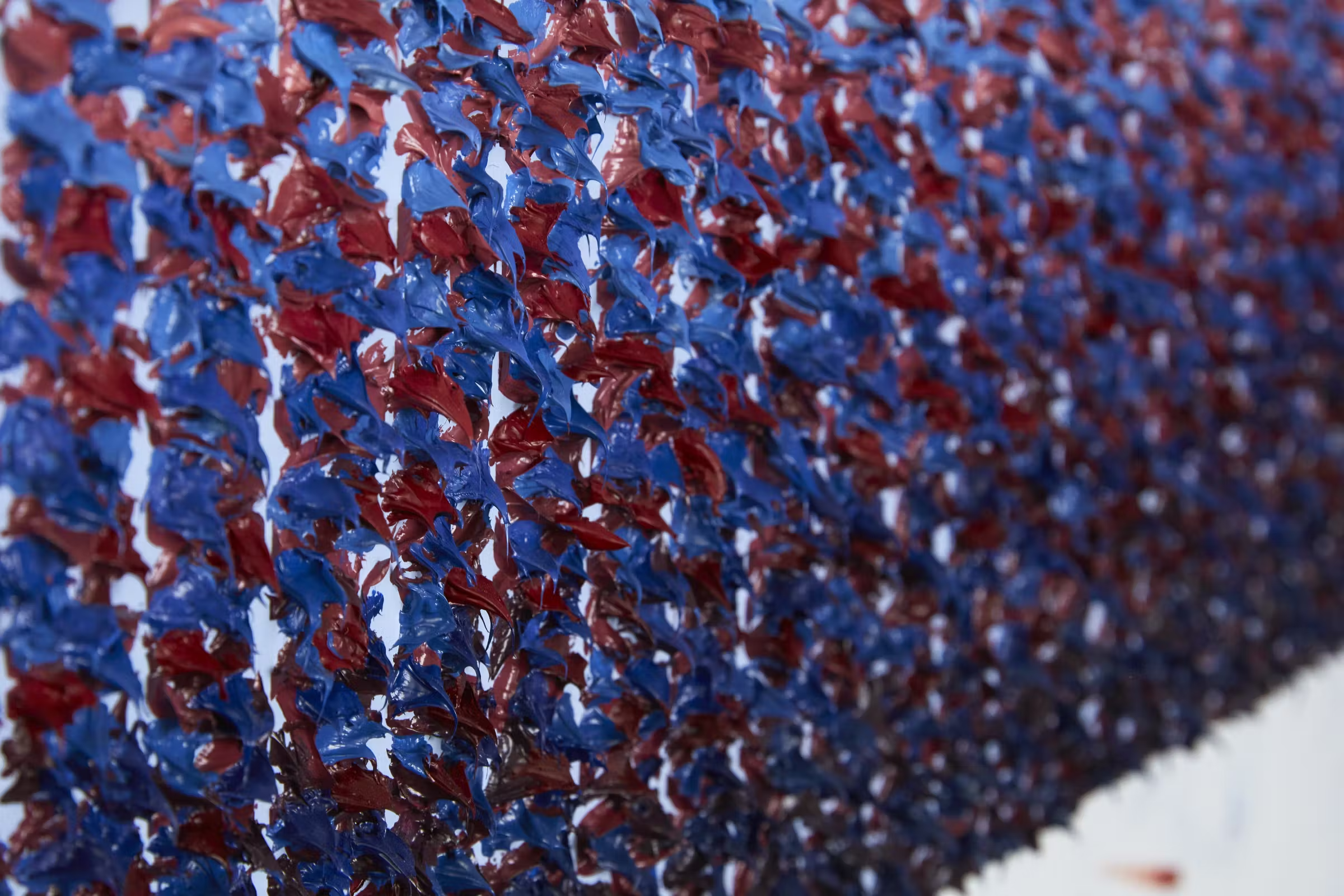
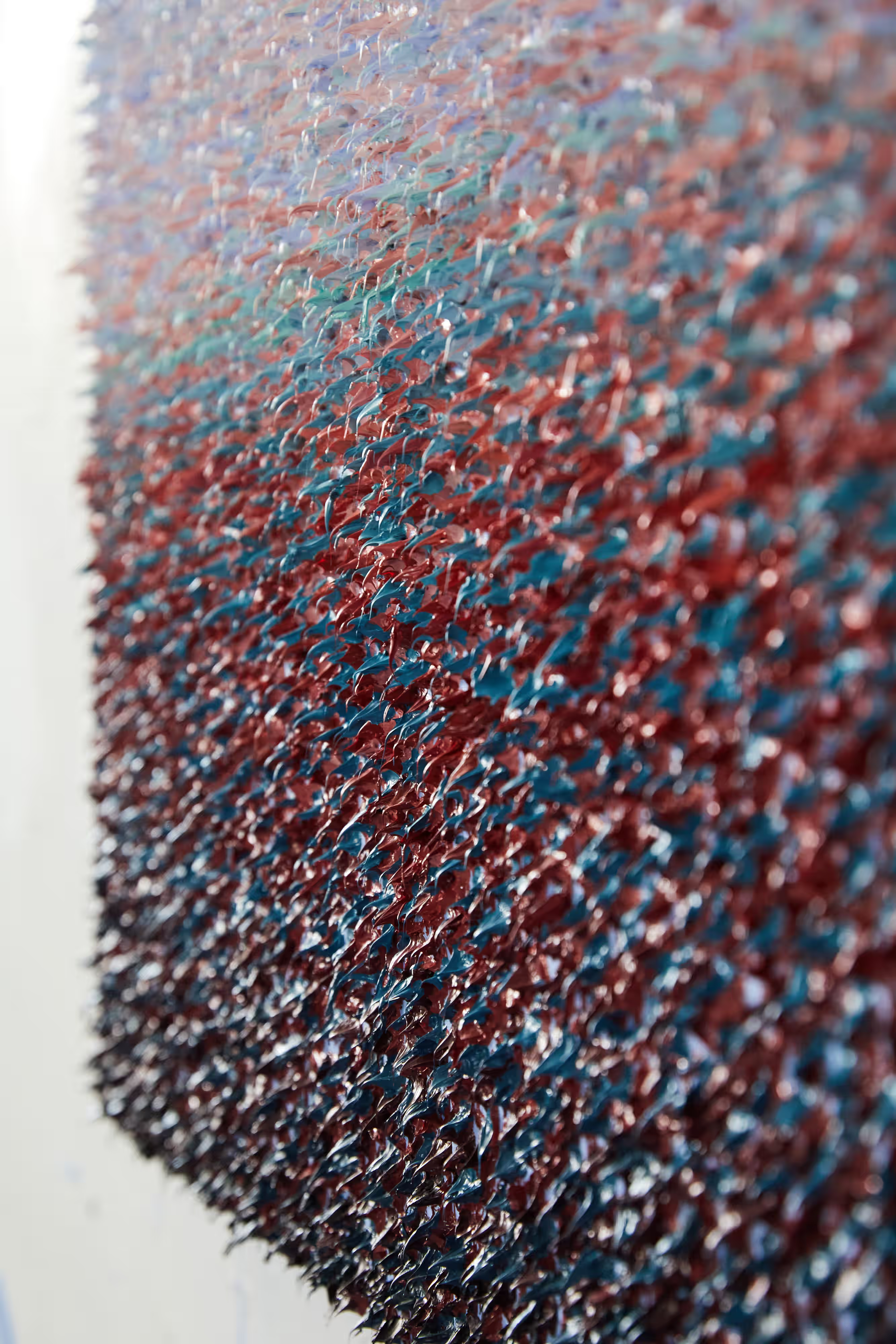
At a distance, my paintings can read as simple gradations of color, carrying a quiet, earthbound presence. Up close, those fields break apart into discrete shapes. As the eye shifts, an irregular field of dots reveals its depth, pointing toward the next hue, continuously layering. Each layer builds a new chromatic stratum, so that the softness one senses from afar is met by a tactile reality at close range.
What may first appear as a simple visual variation is in fact complicated by this doubling—a balance between the smooth gradation of color and the textured depth of the actual surface.
Image: At Kim Hanyoung Studio